Showing posts with label FKR. Show all posts

Sunday, May 14, 2023

The Wilds of Hyrule, the diegetic Zelda campaign for my kids

My kids (and I) love TTRPGs and Zelda: Breath of the Wild (and yes, we are having a blast with Tears of the Kingdom). Obviously, I decided to bring those two love interests together. As you may know by now, given my previous post about ancestries, I already use elements of lore from Zelda in many of the games with my children. In fact, our current Wilds of Hyrule game started sometime after I wrote that post.

Basically, I wanted a TTRPG that gave the same design and aesthetic experience as Zelda: Breath of the Wild (BotW). BotW is not only an amazing and beautiful videogame, but it is also unbelievably simple and practical in its presentation. You not only learn the game as you play, but everything is so minimalist that the immersion aspects are a thing of pure genius!
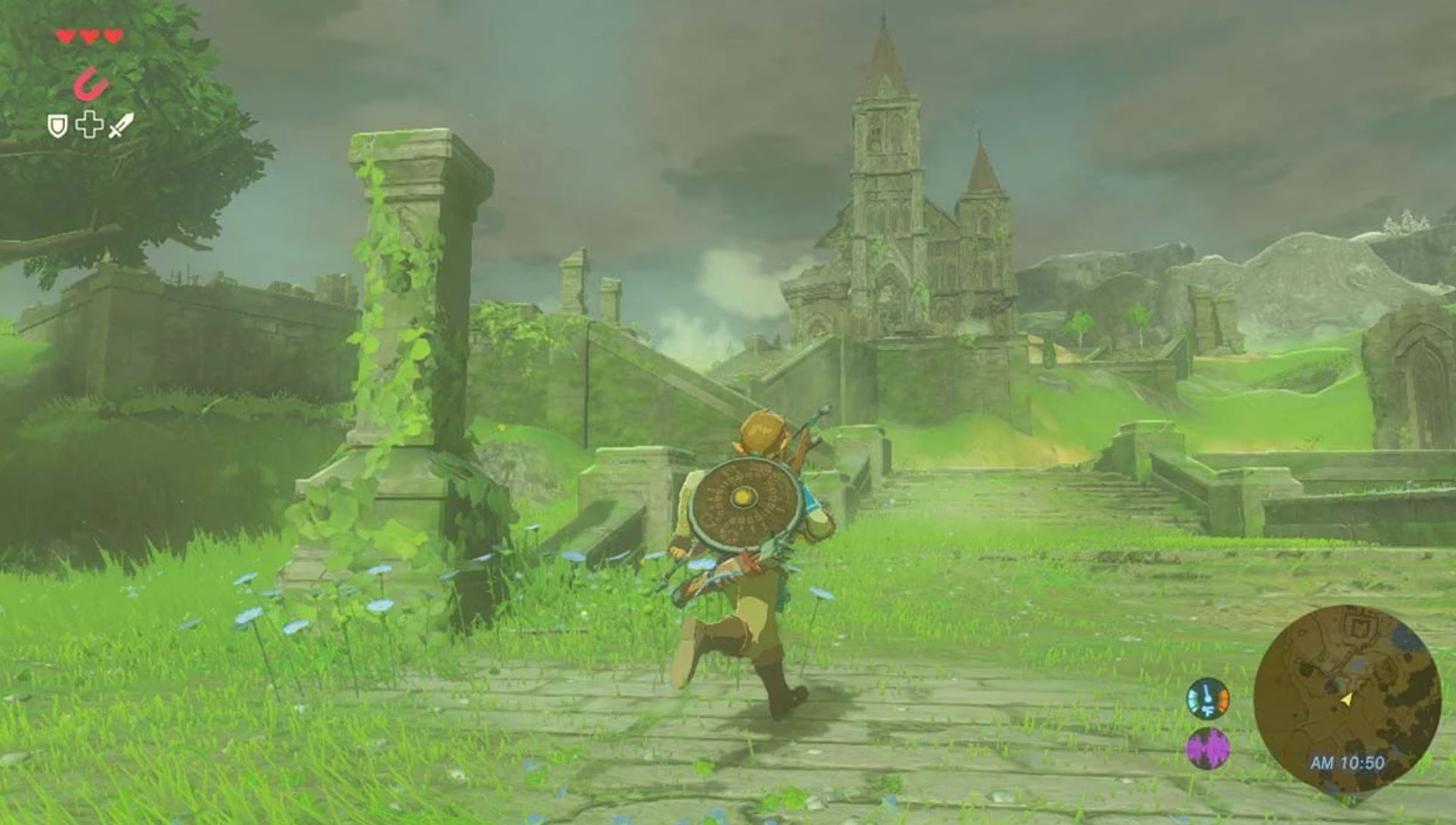
In TTRPG terms, I wanted something as diegetic as possible. In other words, I wanted the game mechanics to, as often as possible, never break the immersion. More importantly, character advancement and change should be a result of the narrative, never of non-diegetic elements such as XP, milestones, advancement tracks etc. Advancement should also never refer to lists of feats, skills, etc. Everything, in the end, must emerge from the narrative itself. Of course, I started with FKR principles. The initial game mechanic is quite simple and well-known: if dice are necessary during the narrative, the player rolls 2d6 against the gamemaster with the highest roll determining who dictates the resolution.

I also like to roll one FUDGE/FATE die with any relevant 2d6 check. Those extra die era excellent for providing non-binary results ("Yes, but...", "Yes, and...", "No, but...", and "No, and..." results). They are also a good indicator regarding equipment damage, something important in a survival-like game like BotW. Usually, after three minus results in the die I declare that an item is broken (but, again, that depends on the narrative).

Like in BotW, each player has only two mechanical stats (and I wanted them to be the only thing in the game that is strictly diegetic): Hearts and Stamina.

You start with 3 Hearts. Every time you fail a dice check in combat you usually suffer 1 Heart of damage, although a high margin, the enemy’s size, and other factors might inflict more damage. If lose all of your Hearths and suffer a new injury then, considering the narrative, I let the player decide between falling unconscious, suffering a serious wound (which fills a part of your sheet, more on that later), or deciding to suffer a deadly wound and keep fighting. Again, everything must make sense in the narrative, not in the rules. I usually don’t let characters suffer more than one serious wound, because I don’t want too much bookkeeping, but that might change. A deadly wound usually means you are going to die barring some extraordinary event (like a Princess using the Triforce to heal you or the Sheikan Chamber of Resurrection). If you are already with a deadly wound and receive another hit, you are dead.

You also start with 3 Stamina. You can use those to push your roll, usually adding +1d6 (and picking the 2 better rolls), although I can see you using Stamina to move further, execute another minor action, concentrate on something like aim without missing your main attack etc. Like in BotW, Stamina also is impacted by extraneous physical and mental effort: a difficult climb, a long journey, surviving inclement weather etc. I like to use it also as a sign of bruises and scratches, or maybe as a result of a hit that is not enough to remove Hearts. Stamina also works as a source of power if a character is doing magic or if I want to apply a success with cost ruling.

Just the 2 Stats in the left, while on the right they can register their items and possibly specific wounds. There is a second sheet for equipment carried in a backpack, belt, or mount, as well as space to list deeds, friends, enemies, and anything else that your PC learned.

Those 2 stats and your character sheet, as you can see below are all that there is to your character. EVERYTHING else is diegetic. Do you want to learn to use a sword? Train, find a master, get possessed by the spirit of the Hero etc. Do you want to learn magic? Find a way, maybe with a master, an ordeal dictated by Korok spirits, a journey to the Font of Wisdom etc. The best part is that I can use the amazing Hyrule lore and BotW map as the location for my sandbox-like game.

I printed a big laminated version of this map to use in my games.

We have played as of this writing close to 10 game sessions and the character have developed quite well. To make sure that the video games are a good source, we established that my kids’ PCs are exploring Hyrule roughly 100 years after the events of BotW (and now Tears of the Kingdoms). Thus, they can use the lore they know from the game to discover what happened with Zelda and Link (who are now legendary figures whose fate is unknown).

Meanwhile, my kids already were cheated by the Yiga Clan (twice!), save the Captain of the (now a) city of Hateno, and journeyed to the top of Mount Lanaryu (which allow me to explore a skill challenge and point-crawl format while still keeping the game 99.99% diegetic).

The PCs could see through this map to visualize how their climbing was going, while from the GM side I could keep track of encounters and challenges like a point-crawl.

So far in the campaign, one of my kids managed to learn the basics of water healing magic from a Zoran, while the other saved (unknowingly) the old champion of an ancient god and was given a blessing of Strength. Both PCs also conquered a dungeon (inside a shrine, because this is BotW) and were blessed with either an extra Hearth or Stamina).

Wilds of Hyrule has been a simple but wonderful experience for me about how an (almost complete) diegetic campaign can be run.

Now I have to add all the cool stuff from Tears of the Kingdom!

Thursday, June 30, 2022

Boku no Hero Academia (A Minimalist) RPG

From time to time I create small hacks of some RPG from my collection so that I can play with my kids. I’ve been doing this for so long (since my daughter was around 4-5 years old and now she is 10!) that I am faced with two interesting consequences: my children don’t want to play anything “bigger” in terms of RPG as they love these DIY games; and they consider the agency and liberty of actions in TTRPGs to be so fun that they have a hard time playing other games (board, cards, etc.).

We have been watching the awesome shonen anime Boku no Hero Academia, about a world where around 80% of the Earth population has some kind of power (or Quirk as they say). “Super Hero” is a profession and the best super heroes of Japan train at the prestigious university UA. So that is where I am setting our games. We have played around 6 sessions so far and it has been blast.

The system is minimal and was not only by awesome minimalist games, but also the OSR, FKR Movement, and RPGs such as Blades in the Dark (besides other games by the great John Harper) and, more recently, GROK?! (by Lester Burton).

I ended up creating the character sheet first and then coming up with rules for it. The basic roll is trying to roll 4+ for success. Under normal conditions a 4+ is a success, but with the proper narrative position and impact it can be a “yes, but…” or a “ yes, and…” success. With the proper advantage even a 3 might be a “no, but…”.

The three bigger in the character sheet represent Mental, Social, and Physical stats. The player writes the proper attribute at the side of each die. For example, during a fight, if your Physical is a d8, you roll the d8 and a 4+ is success.

The d4 is a disadvantage. Each time I feel it is appropriate I might ask for a d4 roll to see how hampered you are by your disadvantage (with a 4 been the only way to ignore it). Right now, my son’s PC disadvantage is that his body does not support his powers at maximum effect, where my daughter’s PC gets nausea if she by using her powers too much in a short time.

The main circle to the left is where your write your main concept/power. The comic balloons to the right are for power stunts, secondary powers, special moves, equipment, allies, and other assets. I let my kids each start the first game with two balloons filled, besides the main circle.

The circle and the various balloons are like aspects and open new narrative actions (like flying, blast, invisibility), depending on your powers.

The explosive balloons to right are for wound conditions and other impairments (even mental or social ones). Once they are all filled you are knocked out/defeated.

In combat, you can choose to continue fighting after that, but after each hit you must mark off one of your 3 stat and a balloon. You cannot use an action based on a die or balloon that is marked. Once all 3 stats are marked you are dead.

Oh, I almost forgot, the row of stars at the bottom is the XP system. Each game session my kids mark one star. Once a group of stars is marked, they “level up” (at first you only need one game session to level up). Each time that happens they can add a description to a new balloon or try to bump up one of their 3 stats, although the later requires two advances (I am still tinkering with that). I also let then change or refine the description of a balloon are filled with each level up, to represent their progress or evolution.

Thursday, July 1, 2021

Races/Ancestries from my kids’ games!

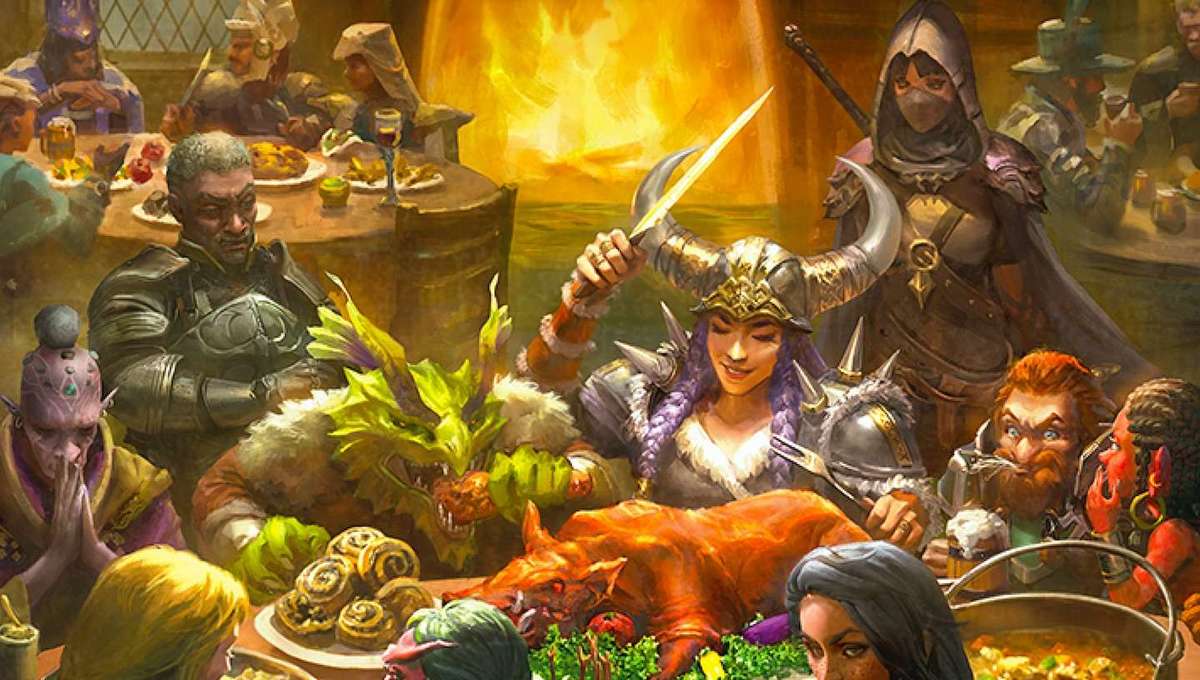
I posted last year how I started running RPGs to my kids, first to my daughter and then to her and my boy. I would often craft mini games, using lots of props, physical activities, and miniatures (how I miss my Lego!). Also, I would often keep things open, because they needed room to use imagination to a degree that normal RPGs are usually confining. Since 2019 I managed slowly to move to a more authentic RPG experience, with a Theatre of the Mind style of game (my favorite one!). Right now, I am finding myself in the strange situation where my kids love table-top RPG (yay!)… but only those that I write and prepare specifically for them. I just don’t see them opening any of my RPG books (and I do try to encourage them into my collection, specially D&D and other d20s). A few weeks ago I finally managed to help them create their first character sheets (they usually would tell me what character they would like to play and I would finish the sheets for them). We are now playing Inuyasha, using Advanced Fighting Fantasy. Before that we were playing our second-ever campaign of a game that I fondly call Dragon Ball FKR. The Free Kriegsspiel Revolution (FKR) really opened my eyes on the idea of “play worlds, not rules” and I also got to run a few D&D-style games for my kids.  For the latter I wanted something that they could sit at the table and play right away (I would call this a “Zelda: Breath of the Wild” approach… and yes they love the videogame). FKR is perfect for that! In our second FKR game my kids basically just choose a race/ancestry, then I run them through a Funnel (none other than a reskinned version of DCC RPG’s Portal Under the Stars). After the Funnel, they picked “classes” in a very loose sort of way and we started an adventure that I took from Sly Flourish's Fantastic Adventures. At that point I had printed the second page of D&D 5E’s character sheet and they filled it as required DURING the game session (for example: when they needed a Dex check, I would often ask them to roll 3d6 for Dex during the game to figure out the value). I tried to keep dice rolling to a bare minimum (following OSR/FKR principles). Opposed checks were also used, in the best FKR fashion (2d6 opposed). For some checks, if we had a defined stat (like the aforementioned Dex) I would ask for a roll under d20. After all, I was also trying to teach them the barebones of D&D. I didn’t used Hit Points yet, only FKR Hits (they usually started with 3). Most attacks dealt 1 Hit, with big monster or critical hits dealing 2 (but the fiction was all that mattered to determine the impact of a hit). Recently, they showed a desire in knowing more about levels, so I might start doing something in that regard (that is, after we play a bit more of our Inuyasha Advanced Fighting Fantasy RPG).

…sorry about the big resume, this is a post about the Races/Ancestries that I use at my kids’ fantasy games. These days I prefer an approach to Race/Ancestry like the ones used in 13th Age and Five Torches Deep (especially the AMAZING Origins supplement). The various GLOG hacks are another wonderful way of using Races/Ancestries for flavor with usually just one or two iconic rules (the rest left to the narrative). As usually, the Red Box Hack, Troika!, Tequendria, hopefully Maze Knights and a score of OSR blogs are another source of references in this regard.

Here is the current list of Races/Ancestries, followed by their iconic abilities (I tried to be as system neutral as possible). I am tempted to use them in other RPGs with my (adult) players to see the result. Because most are taken from famous sources, I placed a few links and didn’t waste time describing them.

Hylians

The beloved of the Goddess who might (or not) be Elven-related. Yes, right out of Zelda (and I have to find some time to get the other races in!). My kids love them! Hylian Heroes are considered exceptional and thus have a closer link to their creator goddess, Hylia.

Ability: Once per game session, a Hylian can prey to the Goddess to find the answer to a simple YES or NO question. The answer comes as an insight or inspiration.

Sayans

Another favorite of my kids (and mine!). Sayans are belic and though. They usually play the role of invaders in most of my games. Noble bloodlines of Sayans, it is said, become dreadful Oozaru (giant apes) under the moonlight, but that could be a myth.

Ability: Sayans get stronger just before you think you defeated them. If brought down in combat, a sayan will rise the next round (with 1 Hit Point, Hit, Vitality Level etc.) and with Advantage (roll twice, takest highest) on all combat checks for that round. Sayans are paralyzed if someone grabs their tail!

The ability to become a berserker giant ape is a good middle-level power. This requires a tail!

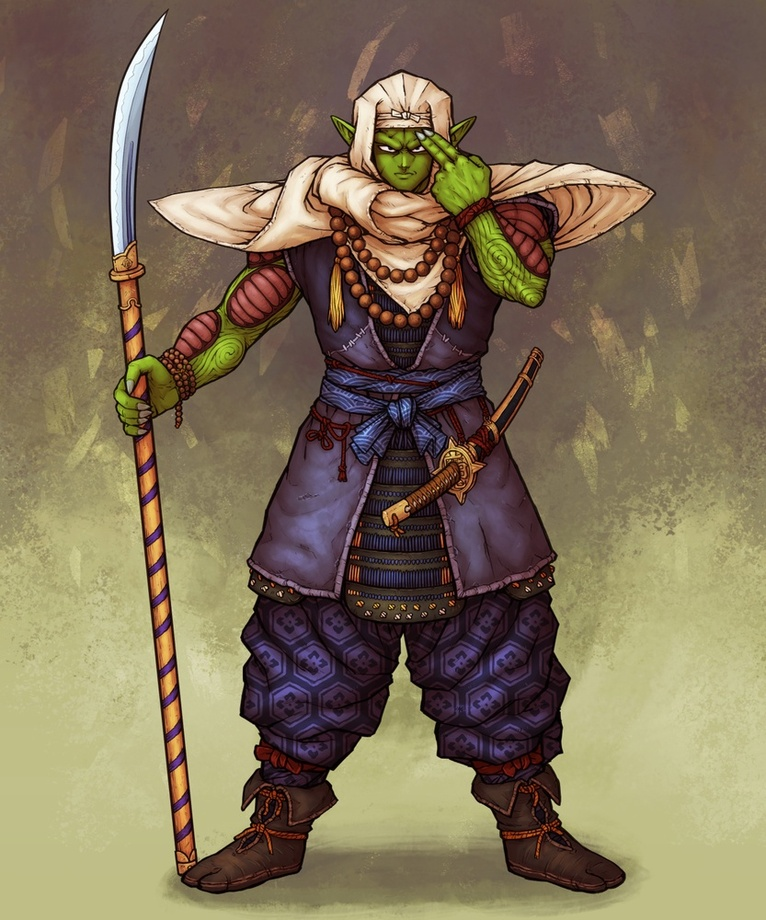
Nameks

This race of mystics came from another world and are the source of all kind of psionic and magic techniques, from healing to the legendary Fusion Technique.

Ability: Nameks can reattach an amputated member and stretch their limbs to triple their length.

The ability to transfer their vitality to another target is a cool low-level power. Full regenerations should be either middle-level and costly, or high level. Fusion is very rare, but definitely a high-level technique.

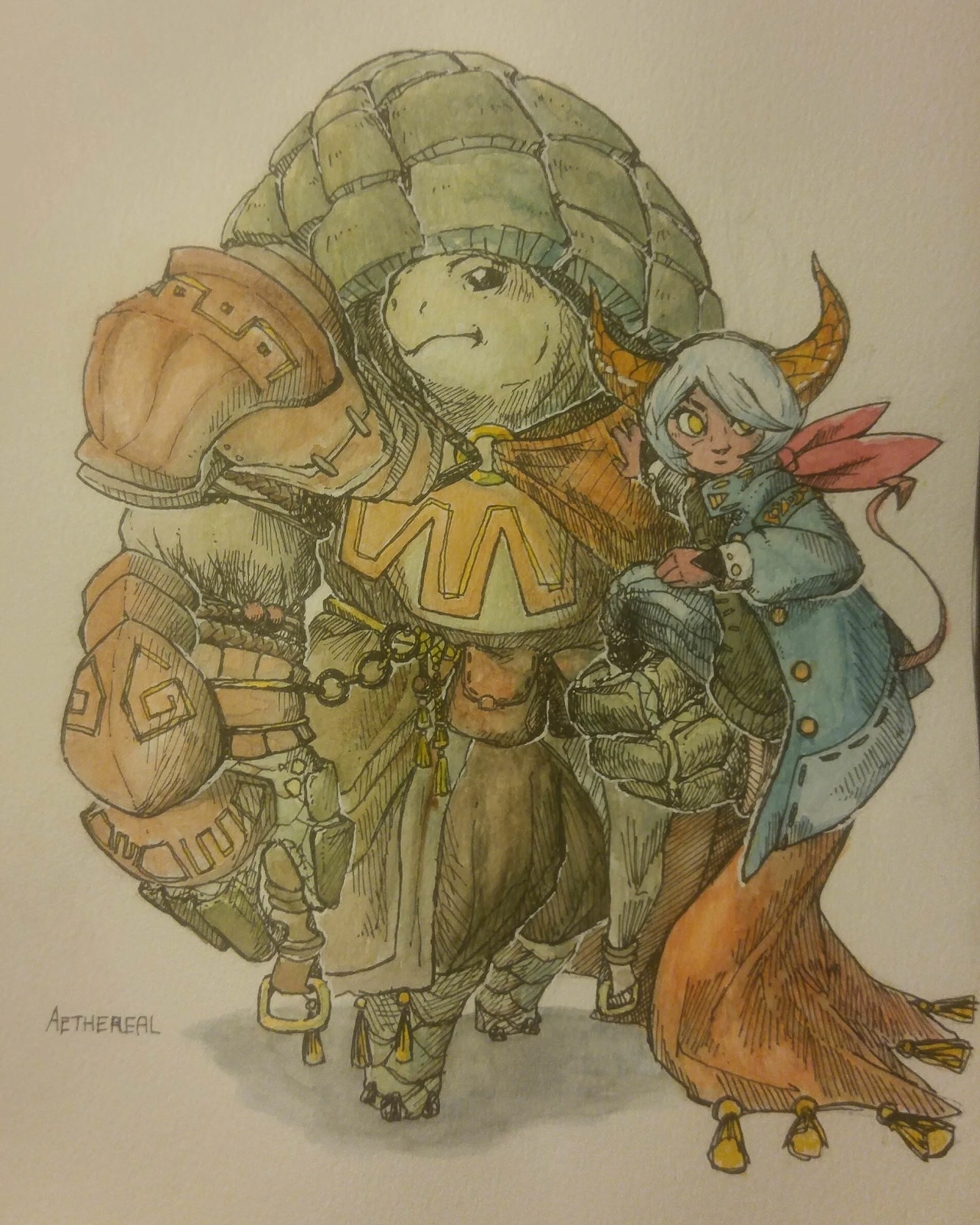
Koopas

My kids love Super Mario, so armored man-turtles are definitely in! Use your favorite take on Tortles (Mystara, Red Steel, 5E etc.). In our campaigns Koopa Heroes are renegades that have forfeited their evil master, an elder turtle-dragon god-king (whose hoard is made of princesses, not gold).

Ability: Koopas are naturally armored and that is a big advantage (full plate-level).

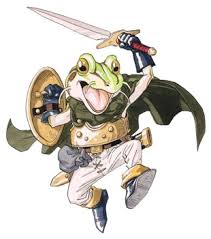
Froggies

Gregarious frogmen that love chivalry or daring deeds. I don’t have any idea where they came from, but the visual is totally from Chrono Trigger.

Ability: to jump REALLY high and a prehensile tongue are Froggies’ obvious advantages.

Dwarves

Classic Tolkien-visual, but also inspired by Castle Falkenstein and King of Dungeons. Dwarves here are loyal, steadfast, and bullheaded. In other words, if you have a Dwarf ally, he is your best friend (even if you don’t want one).

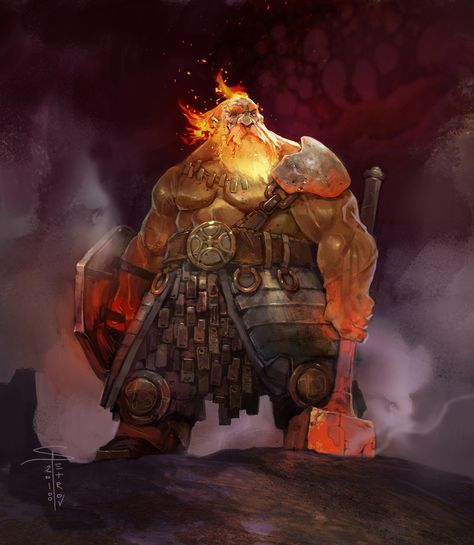
Ability: Dwarves are immune to fire… actually they are not only immune but their hair is flammable. That gives them a very Heavy Metal visual but being “on fire!” tires them quickly.

Hobbits

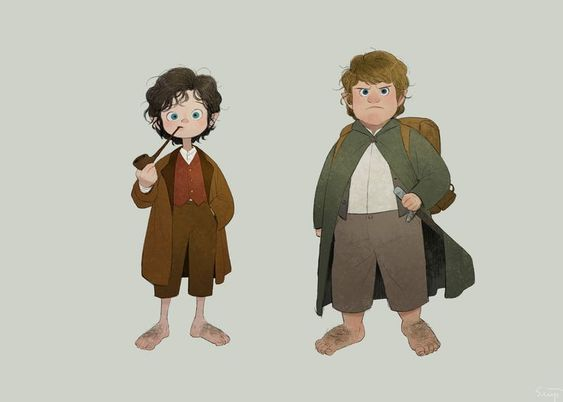
Yes, Hobbits. Not halflings. They are 100% pure Tolkien. The best cookers in the world (and their food is magical).

Ability: when a Hobbit wants to move silently that is also magical. They REALLY are furtive and quiet.

Elves

The visual here is Lodoss War. Elves are magical and otherworldly, nature-loving heroes. Chaotic as you can get and very rare.

Ability: when no one is watching an Elf can teleport. This is not actually teleport, it is more that an Elf really is more “there” than “here” and when there is no one watching they often change position when you least expect it (they can teleport to any place in sight that they could walk to). Finally, an Elf is half-spirit and can try to talk to nature spirits (trees, rocks, rivers etc.). This often requires a lot of time and maybe a lot of singing and dancing. Nature spirits are weird and might not have the information most mortals are looking for.

Humans

Finally, the strangest of all: Humans. Also called the Hungry or Hollow Ones, the Devourers. Humans are everywhere, want everything and are NEVER satisfied. Their god(dess), if any, is Ambition. Other folk believe that humans have a hole where their heart or soul should be.

Ability: Humans are immune to magic. Yes, immune. They cannot be touched by it and that is why they crave magic more than anything. Most become monsters to learn magic, doing terrible things (liches, vampires, half-demons, hags, ogres, the list goes on and on). The safest way for humans to learn magic is to gain a Familiar or Animal Soul. That is always a small animal that follows the Human and is their link to the magic realms. A human with a Familiar can learn magic and even those that don’t learn it often have some knack linked to their Familiar. For example: a human with a Falcon Familiar can talk to birds and one with a Fish familiar never drowns (but can’t breath underwater). Capturing a Familiar gives you power over the Human and killing a Familiar is something terrible for both the Human and the Killer.

P.S.: This take on Humans is supposed to be radical. Humans are different, they lack something. Those that want to be part of something greater get a Familiar. Those that want to be immune to magic don’t. And immunity here is open to the Gamemaster and work both ways. In my games that means you can’t be hurt directly by magic, but indirectly is fine (charm/domination won’t work, you can walk through a magic barrier… but summon a demon and send that demon to kill you will work). Remember, “normal” Humans are immune to all magic, thus they can’t be healed by a spell or use magic items.